






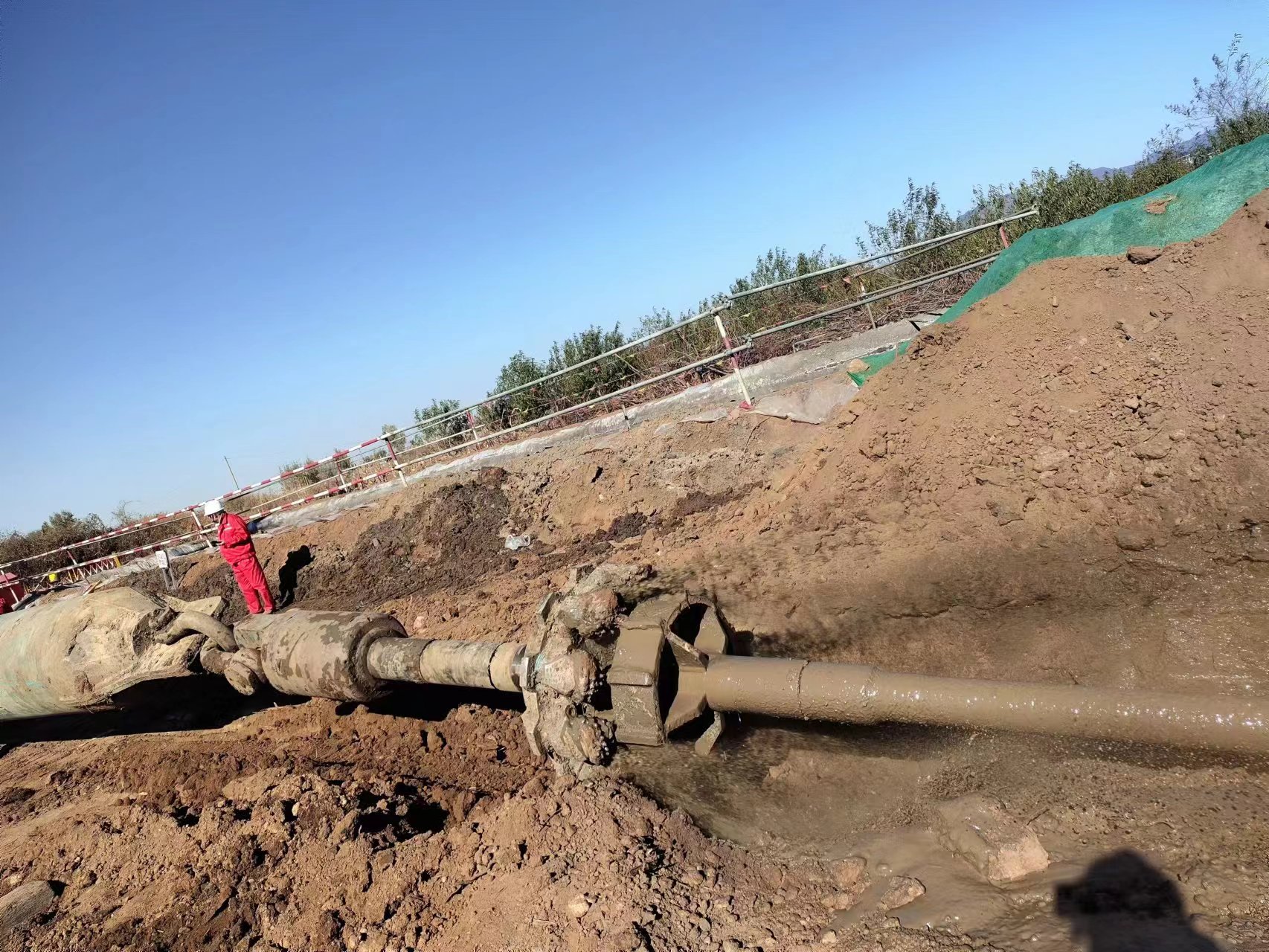

How should reamers and drill bits be paired for horizontal directional drilling (HDD) in rock, clay, and sand/gravel/cobble formations?
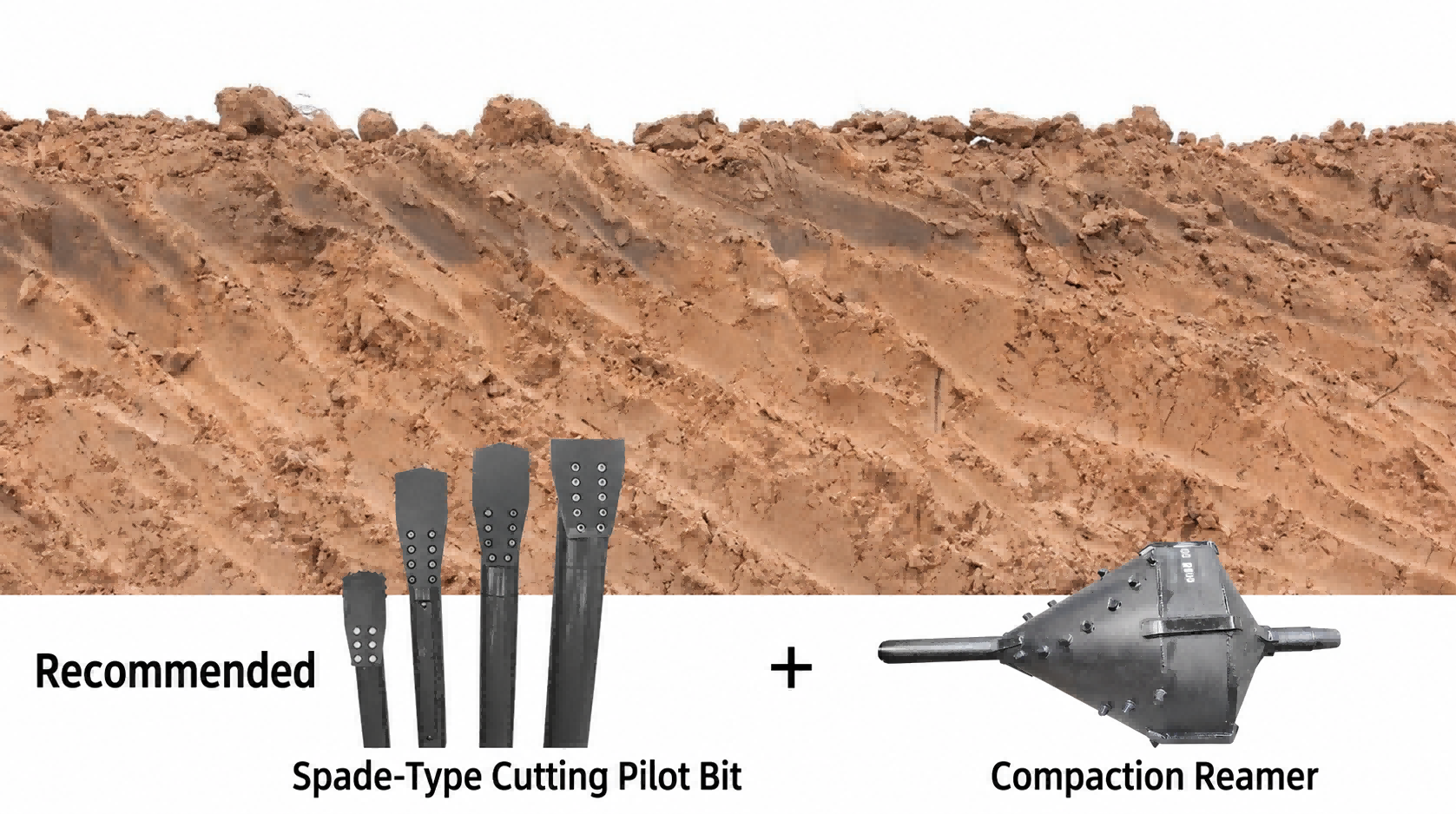
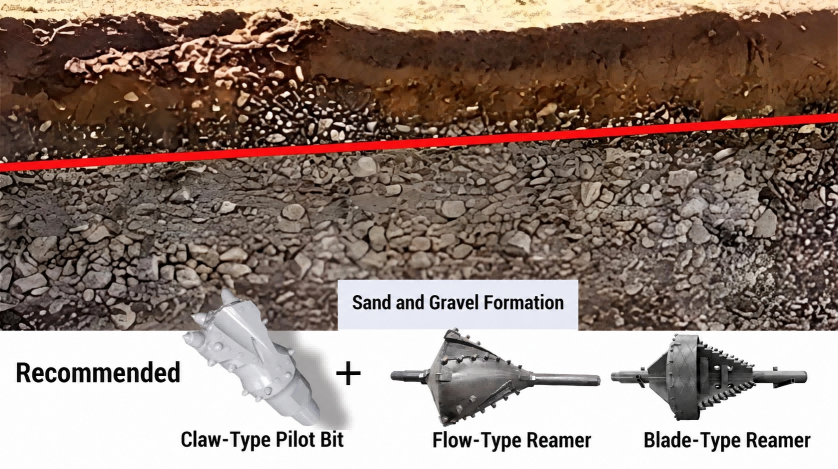
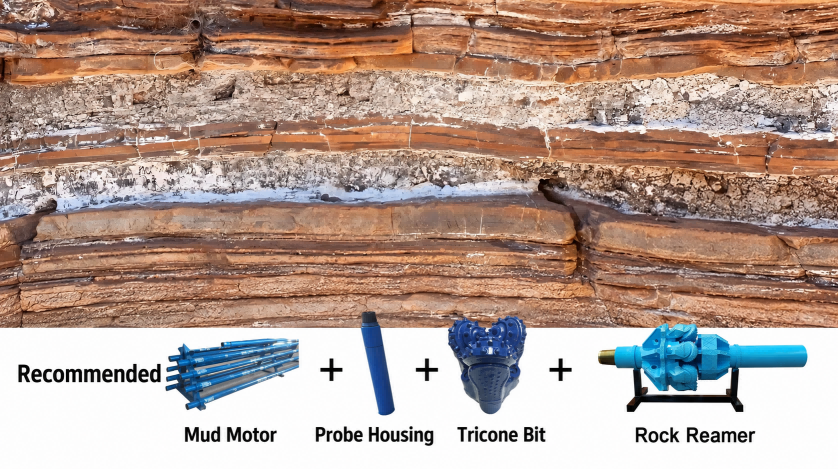
Recommended configurations: In HDD operations, the core principle for selecting drill string components is as follows: for clay, prioritize high-pressure jetting and ample space for cuttings removal; for rock, utilize crushing/cutting actions and roller-cone rock-breaking tools; and for gravel/cobble, focus on fragmentation and preventing the drill string from becoming seized (jammed). • Clay formations: Use a standard spade-type pilot bit paired with a compaction, cutting, or fluted reamer. • Sand and gravel/cobble formations: Use a wear-resistant "eagle-claw" (claw-type) pilot bit paired with a barrel reamer, fluted reamer, or blade-type reamer. • Rock formations: Use a mud motor and a tri-cone drill bit, paired with a rock reamer.
Detailed Selection Logic and Pitfall Avoidance for Various Formations
I. Clay Formations
• Pain Points: Inadequate removal of drilling cuttings can lead to "bit balling" (clogging) or borehole shrinkage caused by mud cake buildup.
• Pilot Bit Selection: Use a spade-type cutting bit; it relies on cutting force to achieve a fast penetration rate.
• Reamer Selection: Use a compaction-type reamer; it helps stabilize the borehole wall and prevents collapse.
• Pitfall Avoidance: Never use a channel-type reamer in clay; an excessively heavy reamer can cause the borehole to become elliptical or sag, leading to deformation and collapse.
II. Sand and Gravel Formations
• Pain Points: Jamming caused by loose rocks, borehole collapse leading to tool entrapment, and deviation of the pilot path. • Pilot Bit Selection: Use a "claw-type" (eagle-claw) pilot bit with high-hardness alloy inserts; this design prevents the cutting teeth from chipping or breaking off upon impact with cobbles.
• Reamer Selection: A flow-channel reamer or a blade-type reamer, paired with a barrel reamer, is recommended. The barrel section provides excellent stabilization and borehole wall conditioning, pressing small-to-medium-sized cobbles—which cannot be flushed out—into the borehole wall to prevent them from falling in and causing the drill string to get stuck.
• Borehole Stabilization Essentials: Drilling fluid must be treated with fluid-loss control agents and high-viscosity additives to maintain borehole wall stability and ensure that the fluid ahead of the reamer can effectively suspend and transport cuttings.
III. Rock Formations
• Common Challenges: Rapid wear of cutting teeth, high risk of drill pipe fracture, and potential stalling during back-reaming.
• Pilot Bit Selection: For the pilot hole phase, a mud motor (downhole motor) combined with a sonde housing and a steel-tooth or insert-type tri-cone bit is recommended.
• Reamer Selection: A rock reamer equipped with roller cutters (tri-cone cutters) must be used. These cutters achieve hole enlargement through rolling impact and crushing of the rock, rather than simple scraping.
• Borehole Stabilization Essentials: The incremental increase in diameter between reaming stages should be moderate (an increase of 100–150 mm per stage is recommended) to prevent overloading and damaging the individual roller cutters.
Troubleshooting and Parameter Calculation (FAQ Format)
Q1: What should be done if the drill string gets stuck or cannot be pulled back while reaming in sand and cobble formations?
Cause Analysis: Most likely, cobbles from a borehole collapse have fallen behind the reamer, acting as a "wedge" that locks the assembly in place.
Corrective Steps:
• Do NOT attempt to force the drill string out! Excessive pulling force can easily lead to a drill pipe fracture. • Immediately increase the drilling fluid flow rate and pump pressure, then attempt to push the drill string forward by 0.5–1 meter to relieve the jamming stress.
• Maintain a low rotation speed while continuously injecting high-viscosity drilling fluid to flush out or displace any obstructing pebbles, then slowly retract the drill string.
Q2: How is the final reamer size determined based on the pipe diameter?
Standard empirical formulas: • Small-diameter pipes (D < 300 mm): Final reamed diameter = Pipe outer diameter × (1.2 – 1.5) • Large-diameter pipes (D ≥ 300 mm): Final reamed diameter = Pipe outer diameter + (200 mm – 400 mm) • When working in rock formations or clay layers prone to borehole contraction, the reamer size should be increased by one additional increment (by 50–100 mm) to reduce resistance during pipe pullback.
Contact:Lily +18258200586(whatsapp)