







Goodeng Machine Strengthens Global After-Sales Service, Maximizes Equipment Uptime for Clients
Rock drilling is widely used in mining, quarrying, construction, and infrastructure projects. But not every drilling method is suitable for every rock formation.
The three common methods—Top Hammer, Down-the-Hole (DTH), and Rotary Drilling—work in different ways and are designed for different applications.
Understanding the difference can help you choose the right surface drilling machine for your project.
- Top Hammer Drilling
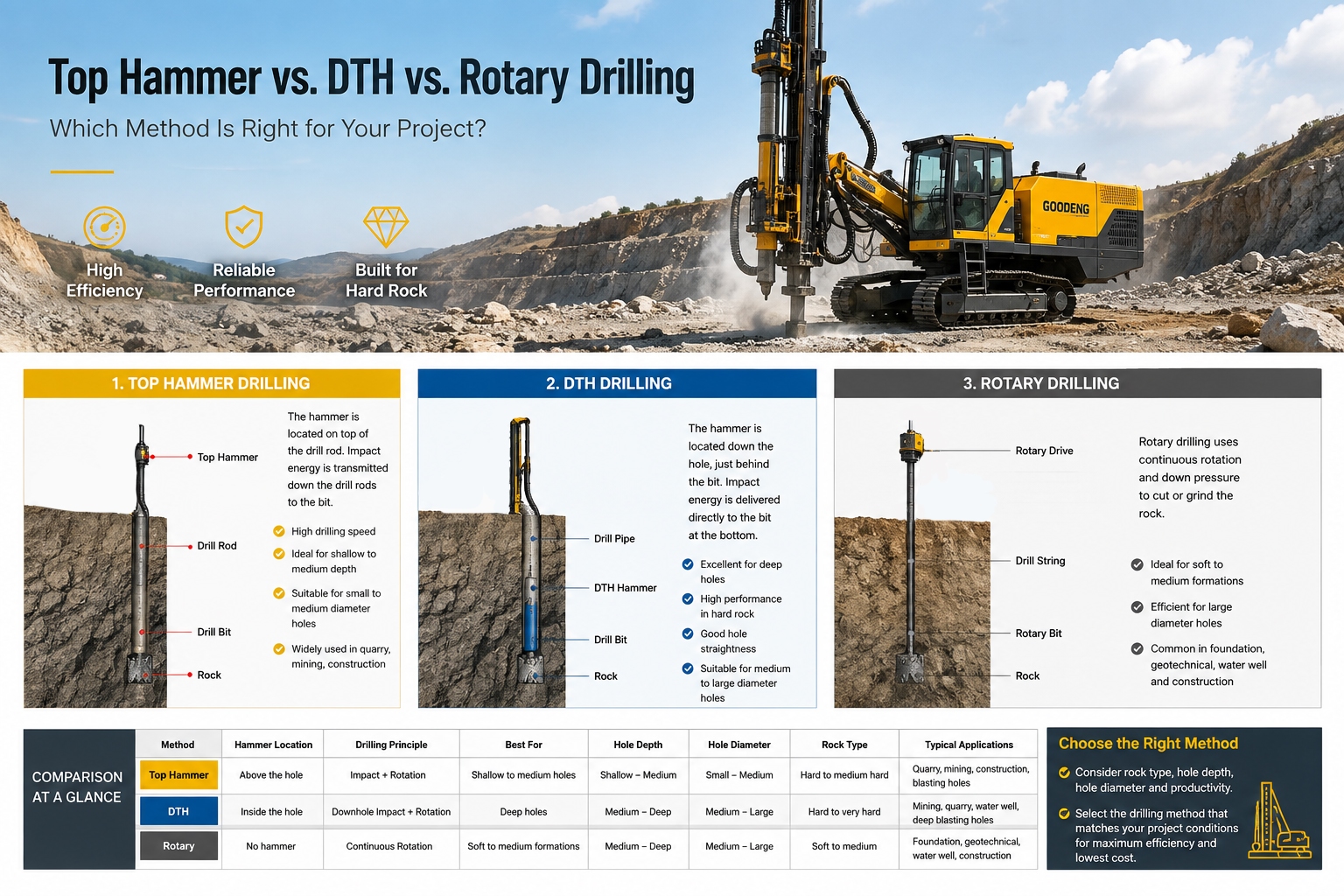
In Top Hammer drilling, the hammer is installed on the drilling rig, above the borehole.
The hammer generates impact energy, which travels through the drill rods to the drill bit. At the same time, the drill string rotates and the machine applies feed force to break the rock.
Main advantages
- High drilling speed in suitable rock
- Compact and highly mobile
- Lower air requirements compared with DTH
- Well suited to shallow and medium-depth holes
- Commonly used in quarrying, mining and construction
Top Hammer is often a good choice when high productivity and mobility are important, especially for relatively shallow rock drilling.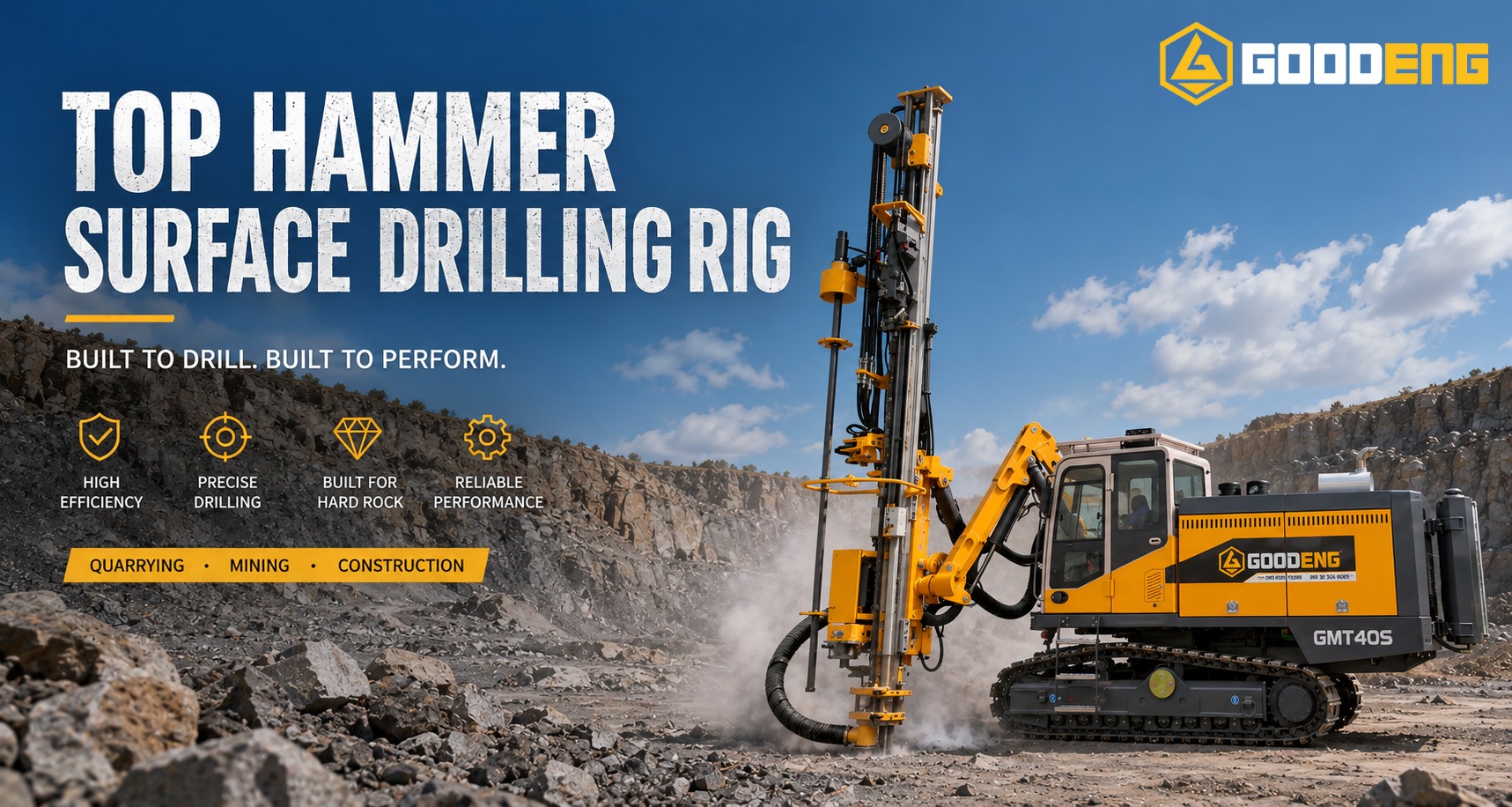
- Down-the-Hole (DTH) Drilling
DTH drilling places the pneumatic hammer directly inside the borehole, immediately behind the drill bit.
Instead of sending impact energy through the entire drill string, the hammer strikes the bit directly at the bottom of the hole. This helps maintain effective impact performance as drilling depth increases.
Main advantages
- Excellent performance in hard rock
- Suitable for deeper holes
- Good hole straightness
- Suitable for medium and large hole diameters
- Widely used in mining, quarrying and water well drilling
DTH is particularly suitable for deep-hole drilling and hard or abrasive rock formations.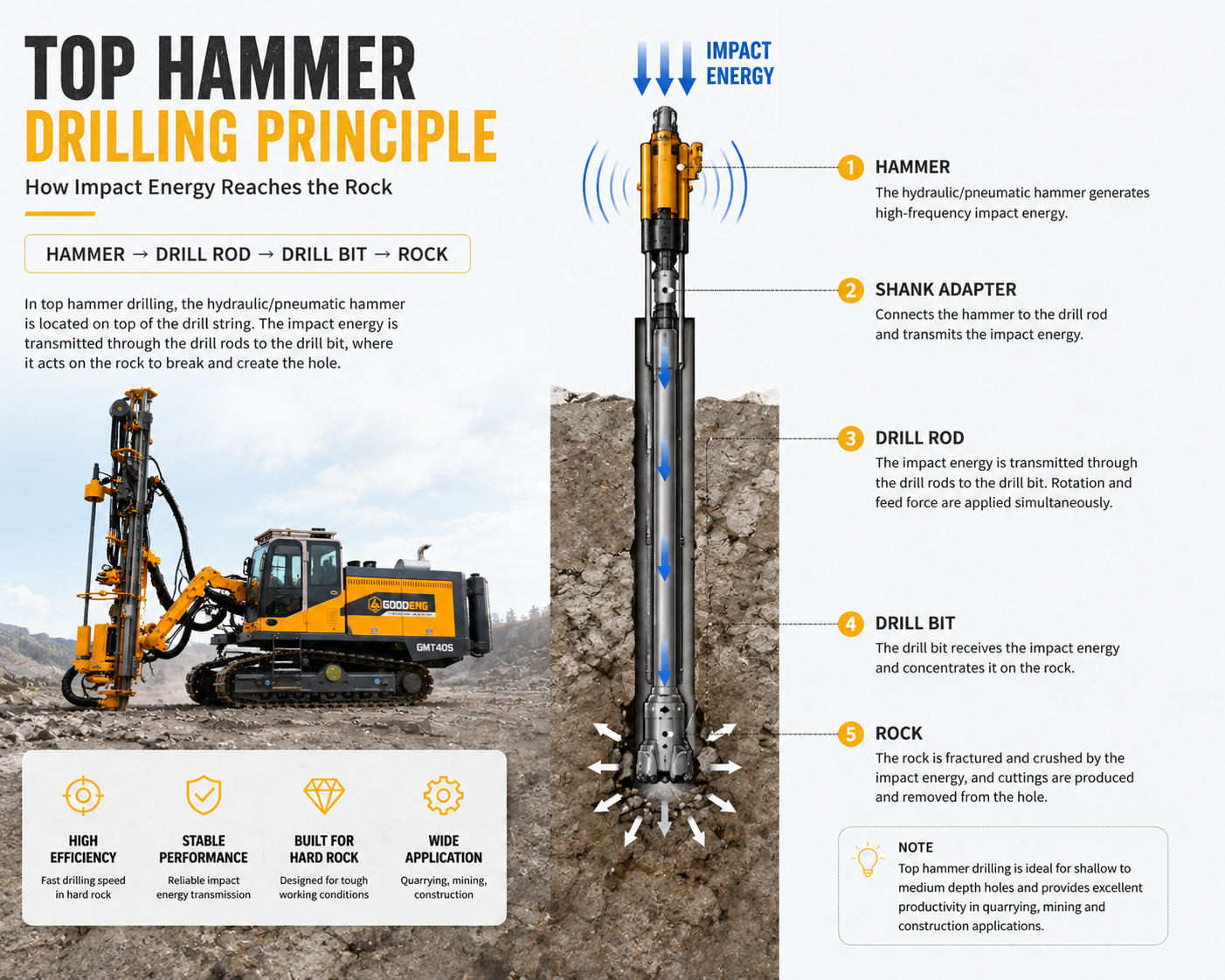
- Rotary Drilling
Unlike Top Hammer and DTH drilling, Rotary Drilling primarily relies on continuous rotation and feed force rather than percussion.
The rotating drill bit cuts, crushes, or grinds the formation to create the borehole.
Rotary drilling is commonly used for soft to medium formations, large-diameter holes, foundation work, geotechnical drilling, and other applications where continuous rotary cutting is effective.
Top Hammer vs. DTH vs. Rotary: Quick Comparison
|
Feature |
Top Hammer |
DTH |
Rotary |
|
Hammer location |
Above the hole |
Inside the hole |
No percussion hammer |
|
Main principle |
Impact + rotation |
Downhole impact + rotation |
Continuous rotation |
|
Best for |
Shallow/medium holes |
Deep & hard-rock holes |
Soft/medium formations |
|
Hole diameter |
Small–medium |
Medium–large |
Medium–large |
|
Main advantage |
High drilling speed |
Stable deep-hole performance |
Efficient continuous drilling |
|
Typical applications |
Quarry, mining, construction |
Mining, quarry, water wells |
Foundation, geotechnical, soft formations |
How to Choose the Right Drilling Method?
There is no single drilling method that is best for every project.
Before selecting a surface drilling machine, consider:
Rock type → Hole diameter → Hole depth → Required productivity → Site conditions
As a simple guideline:
- Shallow rock drilling + high mobility → Top Hammer
- Deep holes + hard rock → DTH
- Soft/medium formations + large-diameter drilling → Rotary
The actual choice should always be based on the geological conditions and required drilling parameters.
Choose the Right Surface Drilling Machine
A professional surface rock drilling machine should be matched to the project—not simply selected based on machine size or power.
At Goodeng Machine, different drilling solutions are available for quarrying, mining, construction, and other surface drilling applications.
Need help choosing the right drilling method or drilling rig? Contact Goodeng Machine and share your required hole diameter, depth, and rock conditions.
If you are interesting in our products, please contact us:
Lynne
WhatsApp: +86 18723398635
Email: liyi@goodeng.com.cn
Tel: +86 18352020960